2026 Summer Fellows


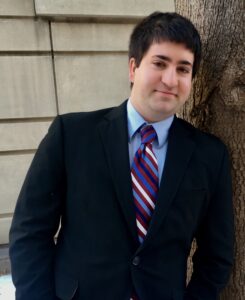
Mike Andrews, Ph.D.

Associate Professor, Department of Economics

In the early 20th century, the vast majority of students attended college close to where they grew up. Today, this is no longer the case. During the middle of the 20th century, colleges began searching for the most talented students from across the country; we call this evolution in higher education policy “the Meritocracy Shock.” Decades of meritocratic sorting policies by universities potentially radically altered the geographic distribution of talent in America, leading to the growing economic inequality and social and political polarization.

In this project—which is a collaboration with Ran Abramitzky (Stanford University), Brian Asquith (Upjohn Institute for Employment Research), Santiago Perez (University of California Davis), and Joe Price (Brigham Young University)—our goal is to understand the causes and consequences of the Meritocracy Shock. To do this, we propose collecting, digitizing, and linking a large collection of data sources on U.S. colleges and college students, including college yearbooks, census data, large-scale surveys of student aptitudes, and more. Using these data, we will provide some of the first comprehensive quantitative evidence on the role of higher education policies in the changing geographic distribution of talent. We will conduct two sets of causal analyses, one investigating the causes of the Meritocracy Shock and the other the consequences on local and national inequality and polarization. We anticipate that the widespread adoption of standardized was an especially important policy for colleges to successfully sort students by academic potential.  We further anticipate that colleges that were able to attract the most talented students produced persistent benefits for their local economies, but these came largely at the expense of locations that were unable to retain their talented young people.


Jé St Sume, Ph.D.

Assistant Professor, Department of Political Science

Democracy is not a self-sustaining infrastructure; it is a fragile system currently experiencing a crisis of legitimacy. As of 2024, only one in three Americans report satisfaction with the state of American democracy (Jones, 2024), signaling an urgent need for researchers and policymakers to identify the mechanisms that sustain public engagement during periods of systemic volatility. This project argues that the most robust model for democratic endurance is found at the margins. Black Americans – whose commitment to the American project has persisted despite centuries of enslavement, state-sanctioned segregation, and enduring structural discrimination – provide a transformative case study of what Dr. St. Sume terms Democratic Stewardship.

As they demonstrate in their upcoming book project, Red, White, and Black: What Black Participation Teaches Us about American Democracy, Black political actors utilize Racial Resilience to metabolize experiences of exclusion into catalysts for restorative action. Whether through the sophisticated redefinition of national identity, social movement mobilization, or high-stakes civic service, Black Americans perform the critical, yet often uncompensated, labor required to stabilize democratic institutions. By analyzing these behaviors, this research moves beyond traditional “top-down” institutional design to reveal the “bottom-up” cognitive and social labor that keeps democracy responsive in the face of backsliding.


Funds for this fellowship are provided by the Center for Social Science Scholarship and the College of Arts, Humanities and Social Sciences (CAHSS). 


Prior awardees include Marina Adler (SAPH), Mir Usman Ali (PUBL), Keisha Allen (EDUC), Dena Aufseeser (GES), Pamela Bennett (PUBL), Amy Bhatt (GWST), William Blake (POLI), Bambi Chapin (SAPH), Christy Chapin (HIST), Sarah Chard (SAPH), Dennis Coates (ECON), Jeffrey Davis (POLI), Amy Froide (HIST), Tim Gindling (ECON), Irina Golubeva (MLLI), David Greenberg (ECON), Brian Grodsky (POLI), Loren Henderson (SAPH), Andrea Kalfoglou (SAPH), Tasneem Khambaty (PSYC), Renee Lambert-Bretiere (MLLI), Douglas Lamdin (ECON), Jiyoon Lee (EDUC), Tania Lizarazo (MLLI), Camee Maddox-Wingfield (SAPH), Christine Mair (SAPH), Marvin Mandell (PUBL), Susan McDonough (HIST), Zoe McLaren (PUBL), Nancy Miller (PUBL), Sara Poggio (MLLI), Bob Rubinstein (SAPH), Dena T. Smith (SAPH), Brian Soller (SAPH), Nianshen Song (HIST), Eric Stokan (POLI), Fernando Tormos-Aponte (PUBL), Christelle Viauroux (ECON), Takashi Yamashita (SAPH/GERO), and Noor Zaidi (HIST).